
University of Strasbourg, France
May 2018 - July 2018
Topics: Optimization, Image Processing
May 2018 - July 2018
Topics: Optimization, Image Processing

May 2017 - July 2017
Topics: Fuzzy Systems, Computer Vision
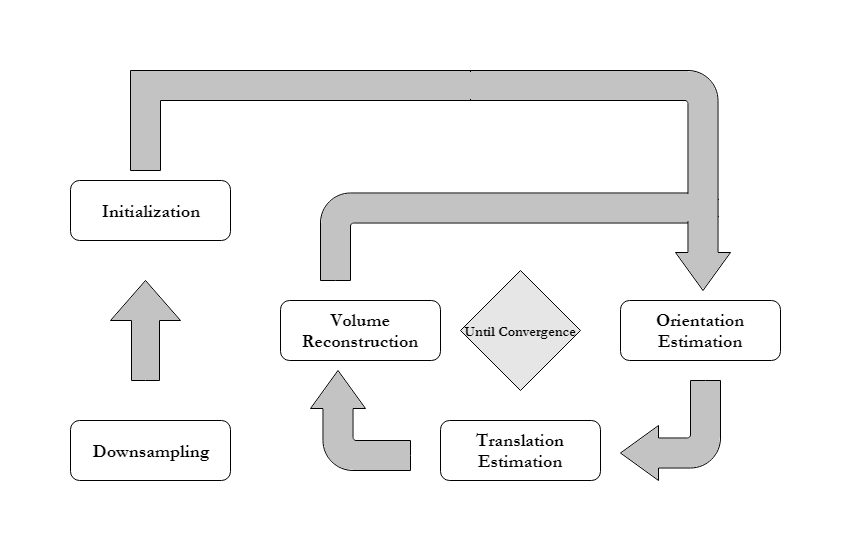
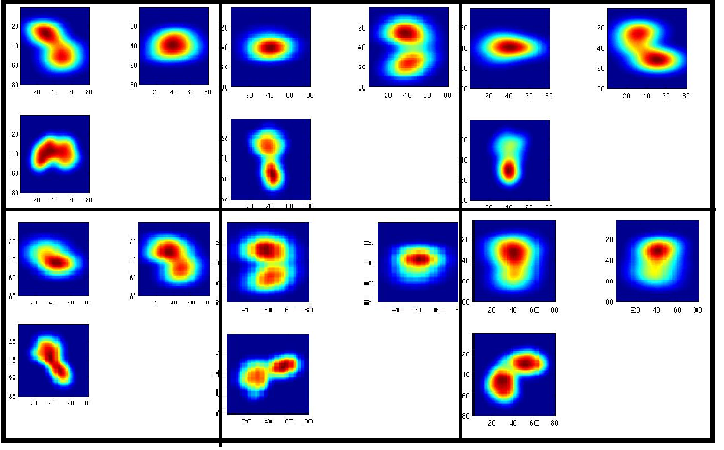
Multi-view Reconstruction of Protein Structure in Fluorescence Microscopy: In the field of biology, people are interested in extracting information from the images (2D or 3D) so as to identify certain symptoms to prevent a disease. In fluorescence imaging, there exist an anisotropy of resolution. It has degraded axial resolution (usually 3-5 times the lateral resolution) mainly due to the use of anisotropic point spread function (psf) used by microscope. This causes important feature loss and poor 3D model of say a protein structure.
The aim of the project was to explore the possibility of estimation of the 3D structure of a protein structure. For the estimation, Mixture of Gaussian (MoG) model was used where the orientation, translation and volume of the structure was estimated using optimization techniques such as stochastic gradient descent, bolder factor's method, etc., repeatedly. The program was written in MATLAB and showed satisfactory results.
The project was conceptualized and implemented from scratch.
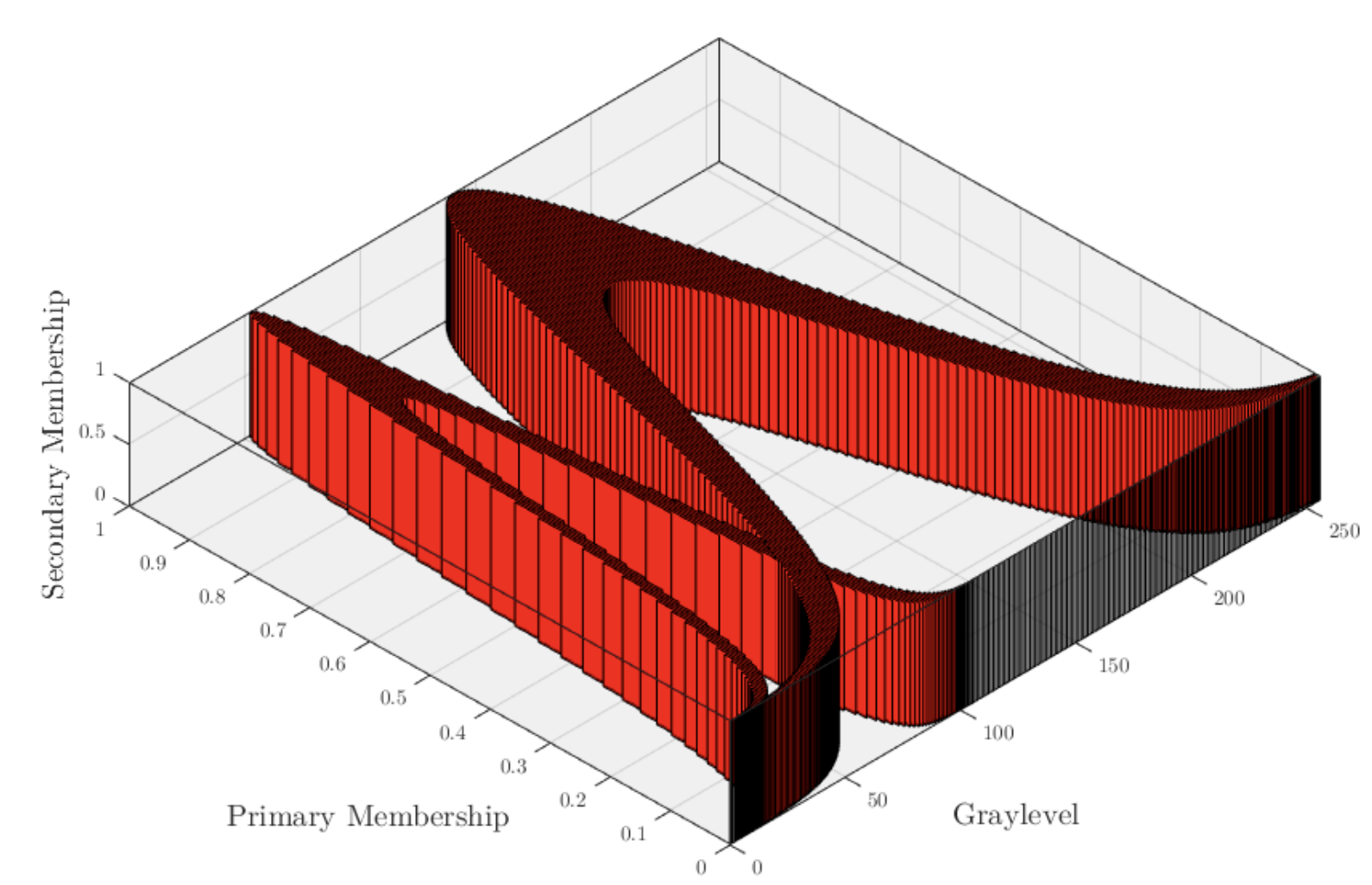
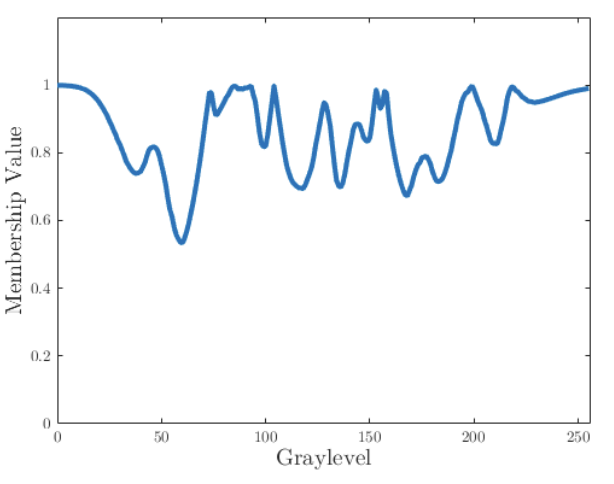
An Interval type-2 Approach to Automatic PDF Generation for Histogram Specification: Image enhancement plays an important role in several application in the field of computer vision and image processing. Histogram specification (HS) is one of the most widely used techniques for contrast enhancement of an image, which requires an appropriate probability density function for the transformation. Here, a fuzzy-based method was proposed to find a suitable PDF automatically for histogram specification using interval type - 2 (IT2) fuzzy approach, based on the fuzzy membership values obtained from the histogram of input image.
The proposed algorithm works in 5 stages which includes - symmetric Gaussian fitting on the histogram, extraction of IT2 fuzzy membership functions (MFs) and therefore, footprint of uncertainty (FOU), obtaining membership value (MV), generating PDF and application of HS. 4 different methods were implemented to find membership values - point-wise method, center of weight method, area method, and karnik-mendel (KM) method. The framework is sensitive to local variations in the histogram and chooses the best PDF so as to improve contrast enhancement. Experimental validity of the methods used is illustrated by qualitative and quantitative analysis on several images using the image quality index - Average Information Content (AIC) or Entropy, and by comparison with the commonly used algorithms such as Histogram Equalization (HE), Recursive Mean-Separate Histogram Equalization (RMSHE) and Brightness Preserving Fuzzy Histogram Equalization (BPFHE). It has been found out that on an average, the algorithm improves the AIC index by 11.5% as compared to the index obtained by histogram equalisation.
The program was written in MATLAB and showed satisfactory results.

Acing GRE: My take on tackling the GRE!
Getting an internship in France: My view on how one should approach the process based on my own experiences.